
What if you leave a career you've spent years building, only to discover you don't like your next one either?
You've worked hard to get where you are. You've developed valuable skills, gained experience, and built a successful career.
But something doesn't fit anymore.
You know you want a change. You just don't know what that change should look like.
And the thought of making the wrong move can keep you stuck.
What if your next job leaves you just as unhappy? What if you have to start over? What if the work you think you'll enjoy turns out to be completely different in practice?
Here's what I want you to know:
You don't have to commit to a new career to start figuring out whether it's right for you.
You can identify realistic career options, investigate what the work involves, and narrow your choices before making a major decision.
Here's how that process works.
1. Identify What You Actually Enjoy Before Exploring Career Options
When Emily started exploring her next career move, she had years of professional experience.
She knew she was capable. But she struggled to separate the work she was good at from the work she genuinely enjoyed.
And that distinction matters.
Being good at something doesn't mean you want to spend another 10 years doing it.
Instead of starting with job titles, we looked at specific experiences from her work and personal life.
Emily described how much she enjoyed taking something that already existed and making it better.
She liked working through a problem, testing ideas, and seeing how small improvements could lead to a stronger result.
She also enjoyed collaborating with others.
When she could exchange ideas with people, build on their thinking, and help move a project forward, she felt engaged.
But not every kind of creative work appealed to her.
Starting from a completely blank page often felt draining.
Give her an initial idea, a rough structure, or something that needed refining, and she could become absorbed in the work.
That was an important distinction.
Emily didn't simply want a more creative career.
She wanted work that combined creative problem-solving, structure, collaboration, and tangible results.
As we explored her experiences, several patterns emerged.
Work that energized Emily:
- Brainstorming and developing ideas with others
- Improving existing products, processes, or creative work
- Turning ideas into practical results
- Solving problems and refining solutions
- Collaborating with people who valued her input
Work that drained her:
- Starting projects without a clear direction
- Working alone for extended periods
- Executing ideas she had little input into
- Constantly having to justify her expertise
- Repetitive work with little room for problem-solving
These weren't just preferences.
They became useful clues about the kinds of roles and environments worth investigating.
How to identify what you want in your next career
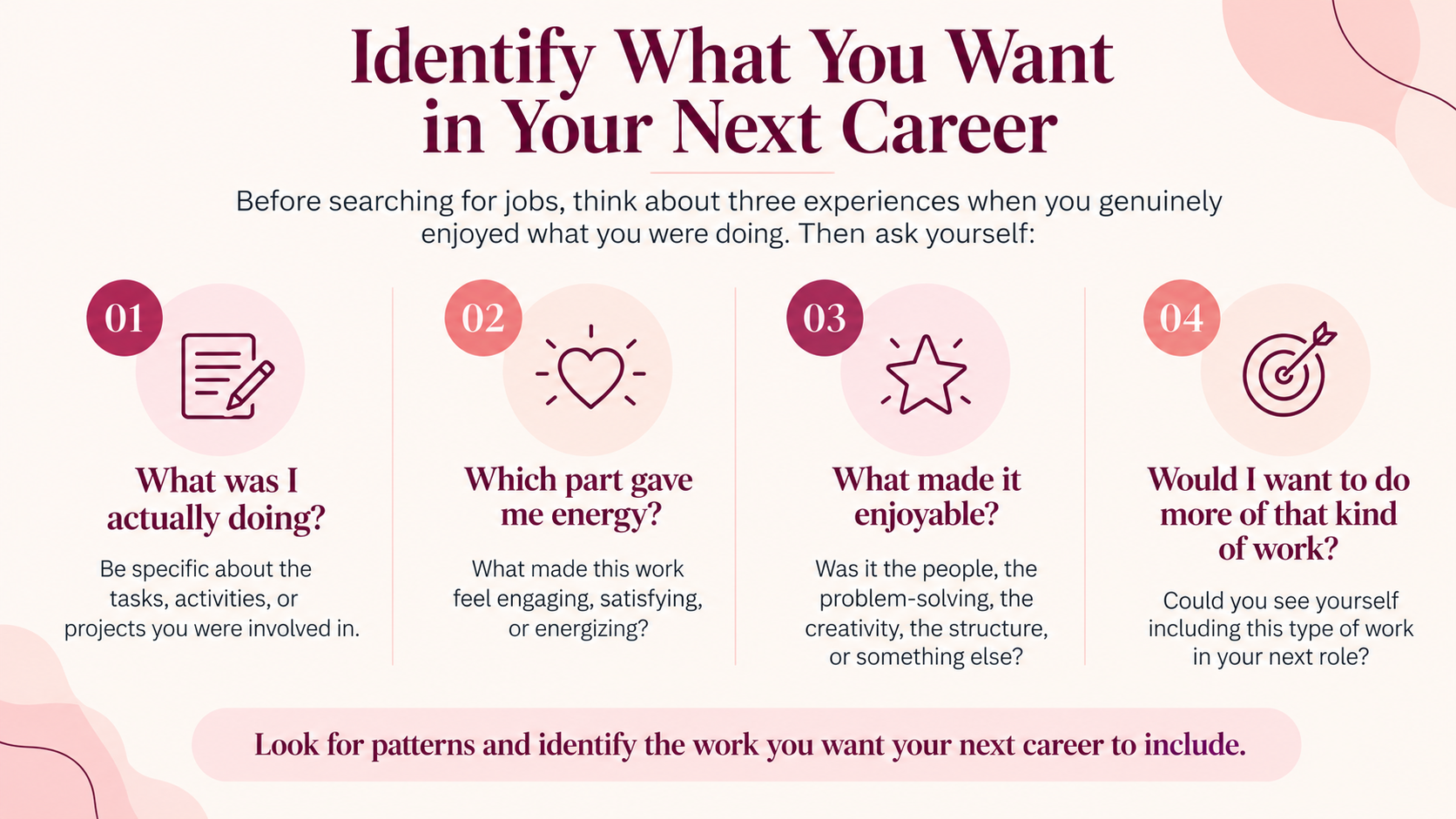
Before searching for jobs, think about three experiences when you genuinely enjoyed what you were doing.
Ask yourself:
- What was I actually doing?
- Which part of the experience gave me energy?
- What made it enjoyable?
- Would I want to do more of that kind of work in my next role?
Then look for patterns.
Don't just list the skills you're good at.
Identify the work you want your next career to include.
2. Find Career Paths That Build on Your Existing Experience
Once we understood what energized Emily, the next question was:
Where could she do more of this work without throwing away the career she'd already built?
This is where career exploration becomes more strategic.
Many successful women assume they have two choices:
Stay in a career that no longer fits, or start over in something completely different.
But your experience may open doors to career paths you haven't considered.
For Emily, I reviewed the work we'd done to understand her strengths, interests, values, and preferred working environment.
Then I connected those insights with her existing professional experience.
I was looking for roles that brought together three things:
- Work she genuinely enjoyed
- Skills and experience she could already use
- Career opportunities that could offer a realistic transition
That process helped me identify several potential directions involving innovation, product development, and turning ideas into practical outcomes.
These weren't random career suggestions.
They were based on the patterns we'd uncovered and the experience Emily already had.
But I wasn't telling her she'd found her next career.
I was giving her a focused set of possibilities to investigate.
That's an important distinction.
The goal of career clarity isn't to pick a job title that sounds exciting.
It's to identify career directions that make sense for you, and understand why they're worth exploring.
3. Look Beyond Job Titles to Understand the Actual Work
Here's where Emily's concerns became especially relevant.
She knew she enjoyed creating, improving, and solving problems.
But she wasn't sure whether those preferences would translate into a job she actually liked.
And she had a point.
Loving one part of a job doesn't mean you'll love the entire role.
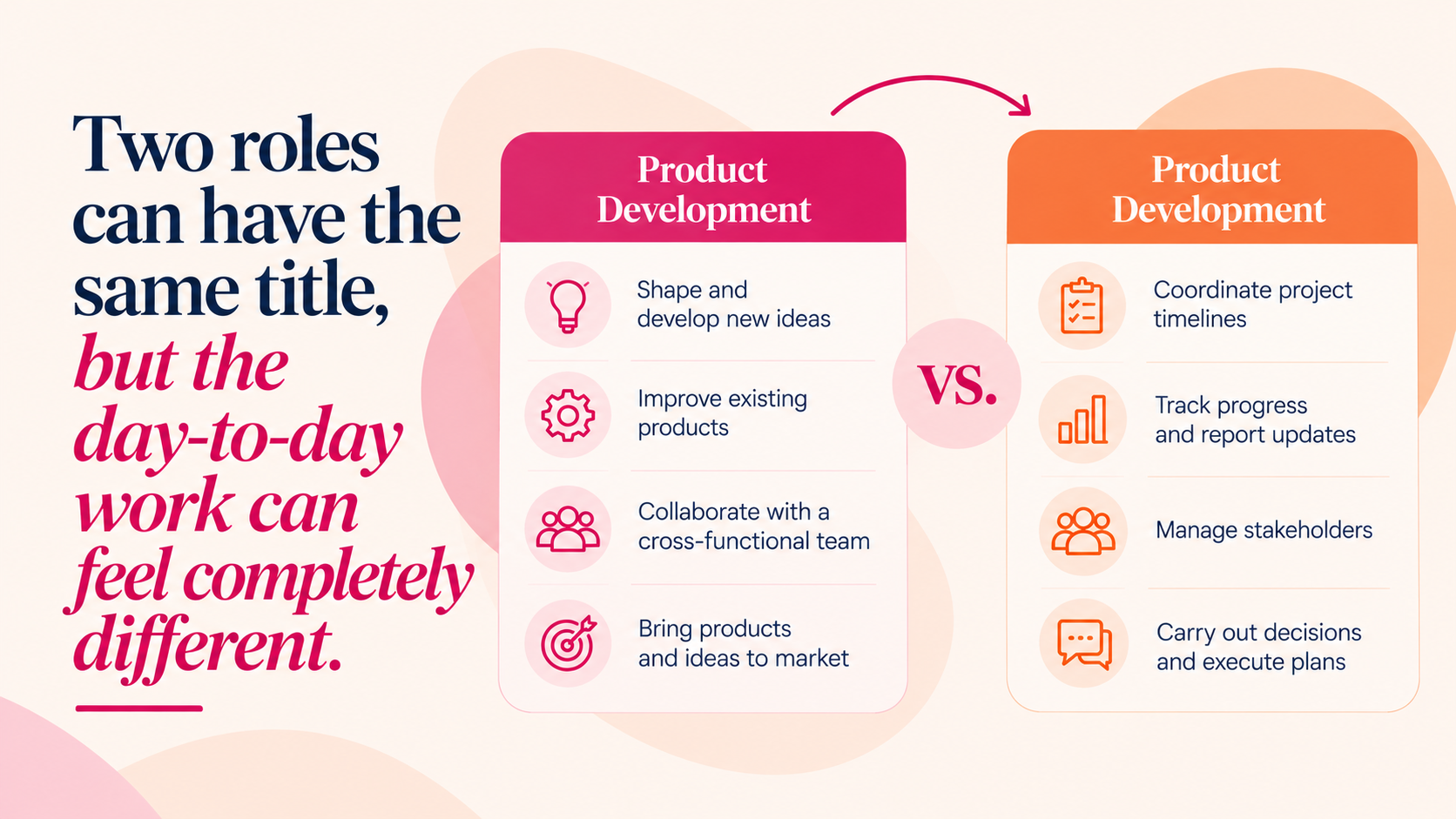
Take a role involving product development.
At one company, that might mean helping shape new ideas, improving products, and collaborating with a team to bring something to market.
At another, it might focus more heavily on coordinating timelines, tracking progress, and managing stakeholders.
Both jobs could fall under a similar title.
But the day-to-day work could feel completely different.
For Emily, that difference mattered.
She enjoyed contributing ideas and helping turn them into something tangible.
She didn't want a role where most of her time was spent managing updates or carrying out decisions without meaningful input.
So researching job titles alone wouldn't be enough.
She needed to understand the responsibilities behind them.
How to research a career you're considering
Start by comparing several job descriptions for the same type of role.
Look for:
- Daily responsibilities: What would you spend most of your time doing?
- Creative involvement: Would you develop ideas, improve existing work, or mainly execute someone else's plans?
- Collaboration: Would you work closely with others or mostly independently?
- Decision-making: Would your ideas and judgment have a meaningful place in the process?
- Experience requirements: Which skills could you transfer from your current career?
Pay attention to what interests you.
But also notice what makes you hesitate.
Sometimes a single responsibility reveals an important question about whether a role is right for you.
You can also use O*NET OnLine, a free resource sponsored by the U.S. Department of Labor, to explore common responsibilities, skills, and work activities across occupations.
The goal isn't to find the perfect job description.
It's to understand what the work could actually look like.
4. Test Your Career Options Before You Commit
One of the most useful ways to explore a career change is to speak with someone already doing the work you're considering.
Not just to ask whether they like their job.
To understand what they actually do.
For Emily, an important question was what creating or developing something would mean in practice.
Would she help shape ideas?
Improve existing concepts?
Work alongside others to solve problems?
Or mainly coordinate the work while other people handled the creative decisions?
These distinctions could make a significant difference to whether a role suited her.
Five questions to ask before pursuing a new career
When speaking with someone in a role you're considering, ask:
- Can you walk me through a recent project? Listen for what they personally contributed.
- What do you spend most of your time doing? Find out which responsibilities dominate the job.
- How are ideas and decisions handled? Understand where team members can contribute their judgment.
- What's the most challenging part of the role? Learn about the work that job descriptions often leave out.
- What experience would someone need to move into this role? Explore how your existing background might transfer.
These conversations help you replace assumptions with real information.
They can also reveal whether the parts of a role that appeal to you are central to the job or only a small part of it.
You don't have to accept a job offer to discover that a career direction isn't right for you.
You can learn that while you're still exploring.
5. Narrow Down Your Career Options Based on What Matters to You
There's another part of Emily's story that matters.
As we explored her past work experiences, she kept coming back to trust.
She'd experienced situations where she felt her expertise wasn't fully recognized.
And she knew she didn't want to repeat that dynamic in her next role.
But when we explored what trust actually meant to her, something important became clear.
She didn't need to make every final decision.
She wanted her ideas to be heard and genuinely considered.
And when someone made a different decision, she wanted to understand the reasoning behind it.
That gave us a much more specific picture of the environment she needed.
"I want to feel trusted" became something she could actually evaluate when considering a new role.
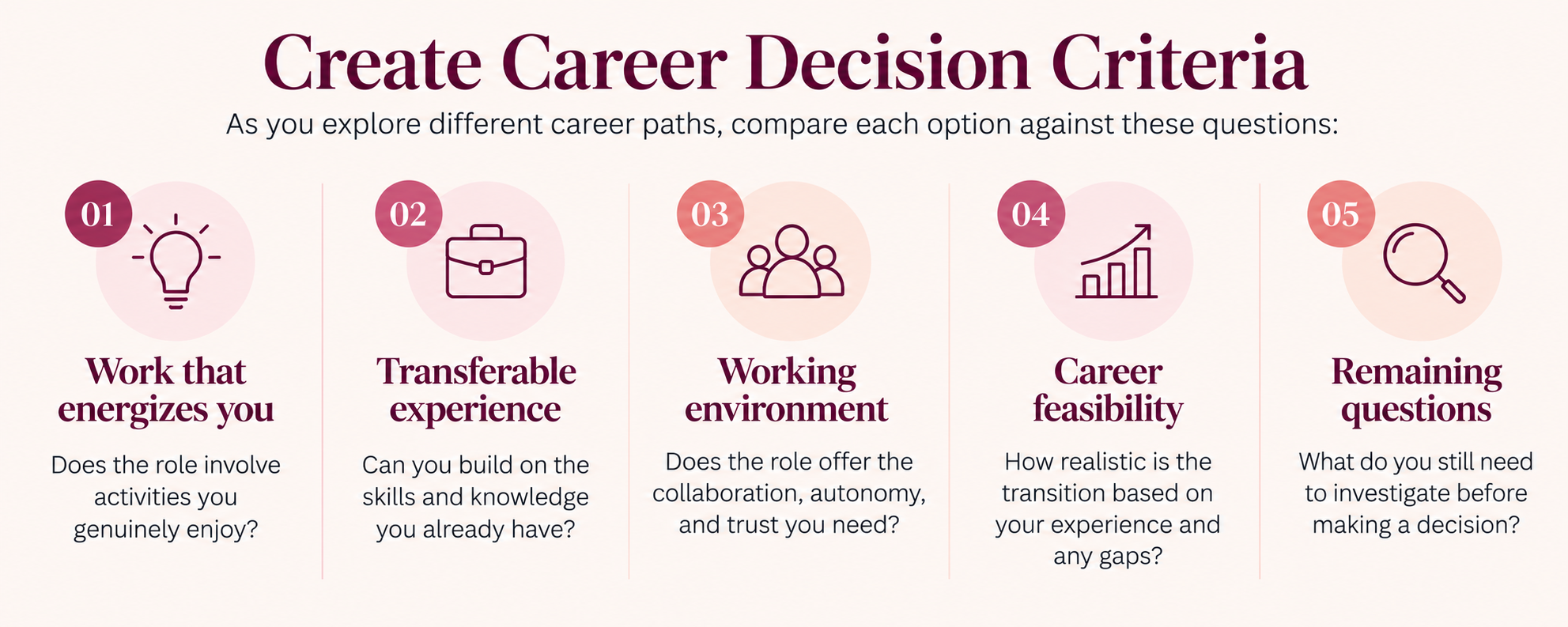
This is why choosing a career direction requires more than identifying interesting responsibilities.
You also need to understand whether the working environment fits you.
You don't need every answer immediately.
The point is to move from a long list of possibilities to a smaller set of career directions supported by evidence.
And as you learn more, you can refine your criteria.
A career direction that initially sounded perfect might turn out to involve work you don't enjoy.
Another option you hadn't considered might be a much better fit.
That's not a setback.
That's the purpose of exploring.
You Don't Need to Be Certain Before You Start Exploring a Career Change
As we discussed potential career directions, Emily worried that the things she enjoyed might not translate into a job she actually liked.
She was trying to predict how she'd feel about a future role before she'd had a chance to investigate it.
But she hadn't accepted a new job.
She hadn't committed to changing careers.
We were still identifying what was worth exploring.
And that's the distinction I want you to remember.
The insights you uncover about yourself are a starting point, not permanent rules.
If you learn that a role involves different responsibilities than you expected, you can use that information to refine your direction.
You don't have to defend your first idea.
You don't have to force yourself into a career because it looked promising at the beginning.
And you don't need absolute certainty before taking the first step.
Career clarity comes from understanding what matters to you, identifying realistic possibilities, and investigating those possibilities before committing.
You don't need to know exactly what your next career will be before you start exploring.
You need a structured way to figure out which direction is right for you.
Ready to Find Your Next Career Direction?
If you've built a successful career but know it no longer fits, you don't have to keep searching through job titles and hoping something clicks.
At Career Bloom, I help successful women identify what they want next, uncover career directions that build on their experience, and create a strategic path forward without unnecessarily starting over.
Book your free Career Clarity Call to talk about what's no longer working in your career and how to start identifying your right next move.
About Career Coach & Author
Theresa White, Career Clarity Expert, 5x Certified Career Coach, and the Founder of Career Bloom, is known for her expertise in guiding people to get unstuck and find the direction they need to move forward in their careers—fast. In a time when so many people are re-evaluating their work, Theresa offers actionable insights that empower clients to identify their true strengths and pursue work that genuinely aligns with their goals.
Theresa’s clients often call her sessions “epiphanies” and “transformational.” She brings immediate clarity to career goals, helping people unlock a deep understanding of what makes work fulfilling for them. Past participants consistently describe her approach as “spot on” and an “answer to questions they’d been asking for weeks.”
Theresa’s approach is empathetic yet practical, and she’s known for empowering clients with a clear direction in as little as 30 days, guaranteeing results.
Connect with Theresa on LinkedIn, listen to the Career Clarity Unlocked Podcast, or schedule your free 30-minute career clarity consultation.

Frequently Asked Questions About Exploring Career Options
1. How can I explore a career change while still employed?
You can explore a career change without quitting your job by identifying the work you want more of, researching realistic career paths, comparing job responsibilities, and speaking with people already working in those roles.
Start with a focused shortlist rather than researching every possible career.
This allows you to gather information and evaluate your options before making a major professional or financial commitment.
2. How do I know if a new career is right for me?
Compare the actual work involved with your strengths, interests, values, and preferred working environment.
Research job descriptions, speak with professionals in the field, and investigate the responsibilities that appeal to you.
You may not be able to eliminate every uncertainty, but you can make a more informed career decision by testing your assumptions before committing.
3. Can I change careers without starting over?
Yes. Many career changes allow you to build on your existing experience rather than beginning again at an entry-level position.
The key is identifying career directions where your transferable skills, professional knowledge, and strengths are valuable.
A strategic career change starts by understanding what you want next and finding realistic ways to get there using the experience you've already built.
What Other Job Seekers Are Reading
- What to do when you're feeling stuck in career
- 8 progressive companies to work for
- 7 Message Templates to Reach Out to Recruiters
- Free Job Search Tracker
- Get Career Clarity In Just 30 Days!
- Take this 60 second quiz to see if a free career clarity call with my team is your next best step.
Subscribe now to never miss the latest blog!
Every Thursday, we cover an important topic, actionable advice, and inspiring content to help you find work that makes you feel like *pinch me* I'm getting paid to do this???
We hate SPAM. We will never sell your information, for any reason.